Is your sleep and fitness tracker misleading you?
Sleep, recovery, and performance are whole-body processes. Here's why multi-zone tracking matters.
Mar 8, 2026
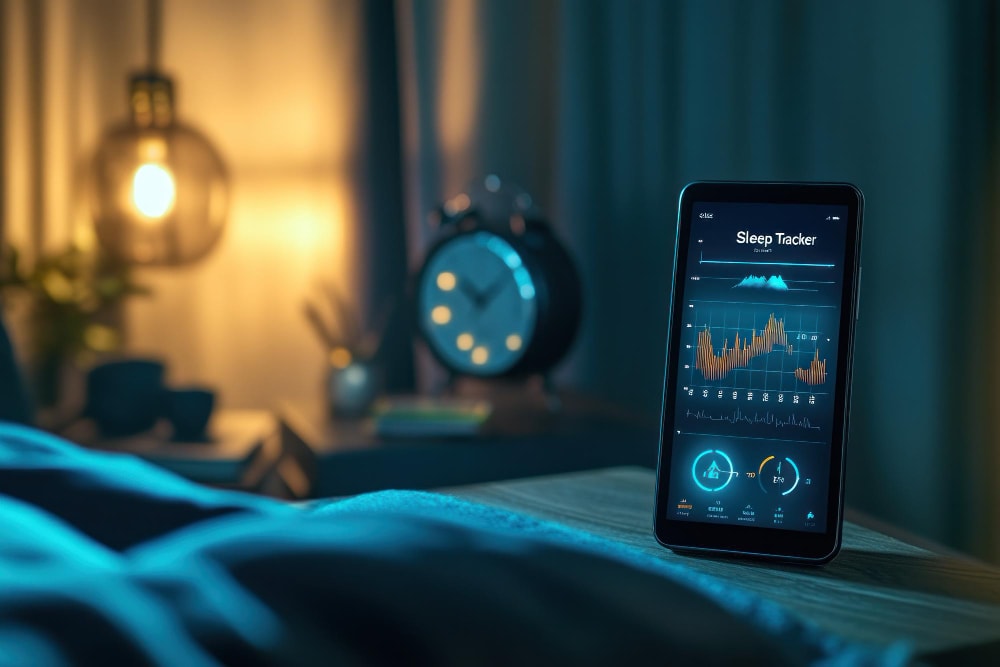
The hidden limitation of today's activity trackers
Our recent U.S. survey1 found that one-third (33%) of Americans surveyed say their sleep quality was generally good in 2024, while only 14% said they slept well consistently. Another 29% say their sleep quality varied. What's causing this rampant lack of sleep? Almost half (44%) of Americans surveyed cite stress or anxiety as the top factor affecting their sleep quality in 2024, followed by insomnia (19%) and physical health issues (16%).
Sleep is widely recognized as the third pillar of health, along with diet and exercise, and not getting enough of it can have effects that extend to your physical and mental well-being, impairing your ability to think clearly and regulate your emotions while also being linked to many health issues including high blood pressure, heart disease and diabetes. Improving overall sleep health should become priority number one on your resolution list for 2025, and it seems most Americans surveyed agree.
Why multi-zone data is the gold standard
Sleep science: A good night's sleep is a coordinated effort inside your body. To understand it fully, doctors use a test called polysomnography, the clinical gold standard.2
Polysomnography tracks multiple dimensions of your body simultaneously: brain waves, eye movements, muscle activity, breathing patterns, oxygen levels, and heart rate. Because sleep emerges from these coordinated changes, no single-point tracker can capture it with complete accuracy.
Athlete monitoring: Elite training never relies on one tracker. Coaches and performance scientists combine multiple tools to understand performance, strain, and recovery, including3:
- core temperature pills
- skin temperature mapping
- motion capture for biomechanics
- lactate testing for muscle fatigue
These methods reflect a fundamental truth: the body operates as an interconnected system. No single signal can explain performance under stress or recovery after exertion. It takes various data points to understand the complete physiological story.
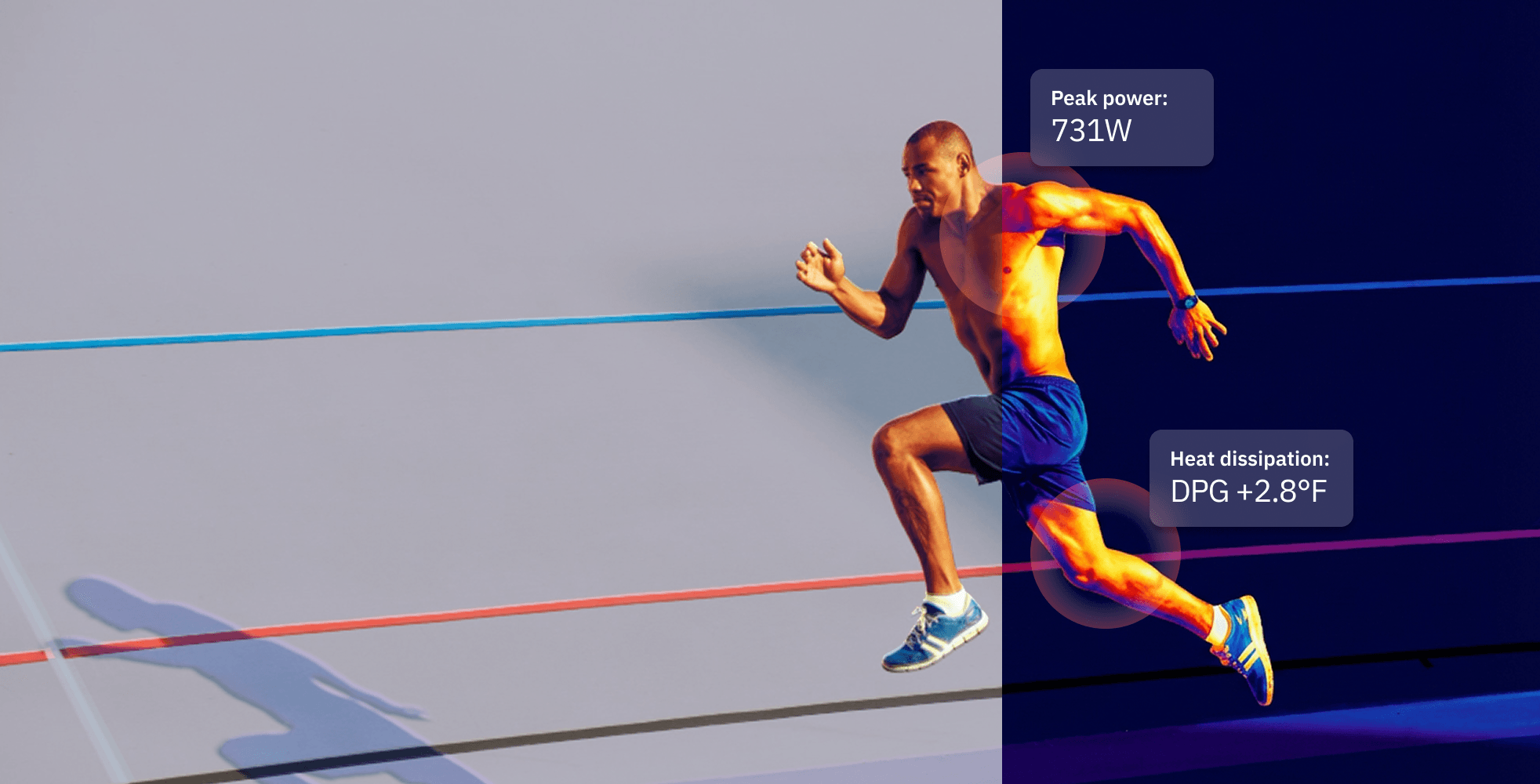
Circadian research: Circadian researchers measure temperature across multiple zones, core, proximal, and distal to determine circadian phase, sleep propensity, and physiological readiness.
One key marker is the distal-proximal gradient (DPG), which reflects how heat shifts between your core and extremities. Warmer hands and feet combined with a cooler core predict faster sleep onset.4 This heat redistribution cannot be captured from a single point on your body.
Looking at multiple zones gives holistic insights, making it essential for tracking circadian patterns. The challenge is that while these multi-dimensional approaches are accurate, they are impractical for daily life.
Why this hasn't been practical until now
Clinical methods require wires, electrodes, controlled environments, and trained staff. High performance athlete monitoring depends on expensive hardware, lab equipment, and specialist interpretation. Multi-zone thermoregulation setups often involve multiple probes placed at different points on the body.5 These systems work well in labs, but they are far too burdensome for everyday use.
Consumers want simple devices, but simplicity has forced wearables to rely on single-point shortcuts. That trade-off misses crucial heat flow information between core and limbs and misreads sleep and recovery when the body is quietly awake or thermally stressed.
This is the gap Larcz was designed to solve.
Meet Larcz: Multi-zone tracking made practical
Larcz brings whole-body insight into everyday life in a form factor designed for real-world use.
With multi-zone tracking, Larcz measures coordinated signals across key body zones that reflect sleep readiness, circadian state, thermal management, and performance output. This approach bridges the gap between clinical accuracy and real-world practicality.
Larcz uses two lightweight pods and flexible patches to read heat flow between your core (head and torso) and limbs (arms and legs). By reading these patterns over days and weeks, Larcz helps you find your best sleep and performance windows, monitor cooling efficiency, and track training output.
Core advantages:
- Sleep and performance insights interpreted through whole-body thermal shifts, not single-point estimates
- A clearer picture of when your body is primed for sleep, recovery, and performance
What Larcz unlocks through multi-zone tracking
-
Go beyond single-point tracking. Multi-zone sensing captures heat flow and gives more accurate signals for energy, power, and recovery, even during movement.
-
Find your natural sleep window. Your sleep timing isn't random; it follows your body's thermal rhythm. By measuring both core and limb zones, Larcz detects your biological night and identifies the window when you're most likely to fall asleep faster and wake up refreshed.
-
Performance without guesswork. Fatigue and overheating show up in different zones. Larcz reveals true load and cooling efficiency so you can pace and hydrate smarter.
-
Your night's thermal story. Heat moves across your body while you sleep, shaping recovery. Multi-zone sensing explains restlessness and next-day readiness better than motion or heart rate alone.
Larcz is designed for real life: discreet, comfortable, and grounded in circadian and thermoregulation science. For the first time, multi-zone tracking is accessible outside the lab, unlocking insights that single-point wearables have never been able to provide.
Your edge starts here
Discover your true windows for sleep and performance with Larcz's multi-zone thermal intelligence. Get early access now.
References:
-
The Better Sleep Clinic. "How Accurate Are Sleep Trackers On Smart Watches And Smart Rings?" The Better Sleep Clinic, https://thebettersleepclinic.com/blog/how-accurate-are-sleep-trackers-smart-watches-smart-rings
-
Kline, C. E. "Polysomnography." Encyclopedia of Behavioral Medicine, edited by Marc D. Gellman, Springer, Cham, 2020. https://doi.org/10.1007/978-3-030-39903-0_825
-
James, Carl, et al. "The Integration of Multi-Sensor Wearables in Elite Sport." Gatorade Sports Science Institute, May 2024, https://www.gssiweb.org/sports-science-exchange/article/the-integration-of-multi-sensor-wearables-in-elite-sport
-
Krauchi, Kurt, and Anna Wirz-Justice. "Circadian Clues to Sleep Onset Mechanisms." Neuropsychopharmacology, vol. 25, 2001, pp. S92-S96. https://www.nature.com/articles/1395758
-
"Standard Polysomnography." American Association of Sleep Technologists, 2021, https://www.aastweb.org/Portals/0/Docs/Resources/Guidelines/AAST%20PSG%20Guideline%20Final.pdf